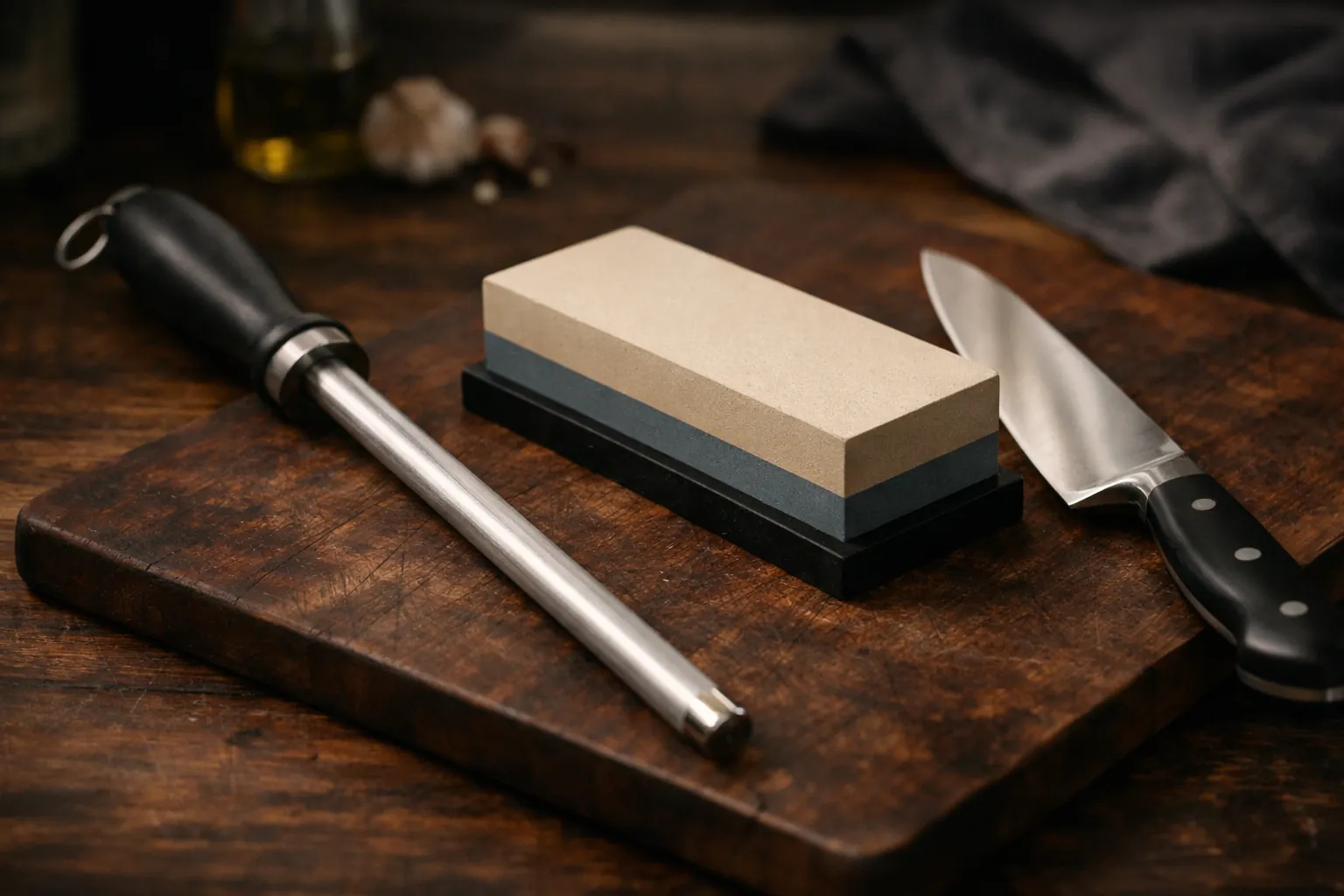
A honing rod realigns a knife's edge between sharpenings; a whetstone grinds a new edge when the old one is worn. They do different jobs, so most cooks need both: hone often (every few uses) and sharpen occasionally (a few times a year). If you only buy one, buy a sharpener, because honing can't rescue a truly dull knife.
What actually happens to the edge
A sharp edge is so thin that ordinary cutting bends it over at a microscopic level. The knife feels dull even though the metal is still there. Honing pushes that rolled edge back into line. Over time, though, the edge wears away and rounds off; then only sharpening, which removes metal to form a fresh edge, will fix it.
| Honing rod | Whetstone / sharpener | |
|---|---|---|
| What it does | Realigns a rolled edge (steel); light abrasion (ceramic, diamond) | Removes metal to form a new edge |
| How often | Every few uses | A few times a year for home cooks |
| Time | Under a minute | 5–15 minutes on a stone |
| Metal removed | None to very little | Some, by design |
| Fixes a truly dull knife? | No | Yes |
| Skill | Low | Moderate (stone), low (guided/electric) |
This explainer reflects standard, widely taught knife care. We describe products from their Amazon listings, checked October 3, 2026, and haven't run our own tests. How we research.
How to tell which one your knife needs
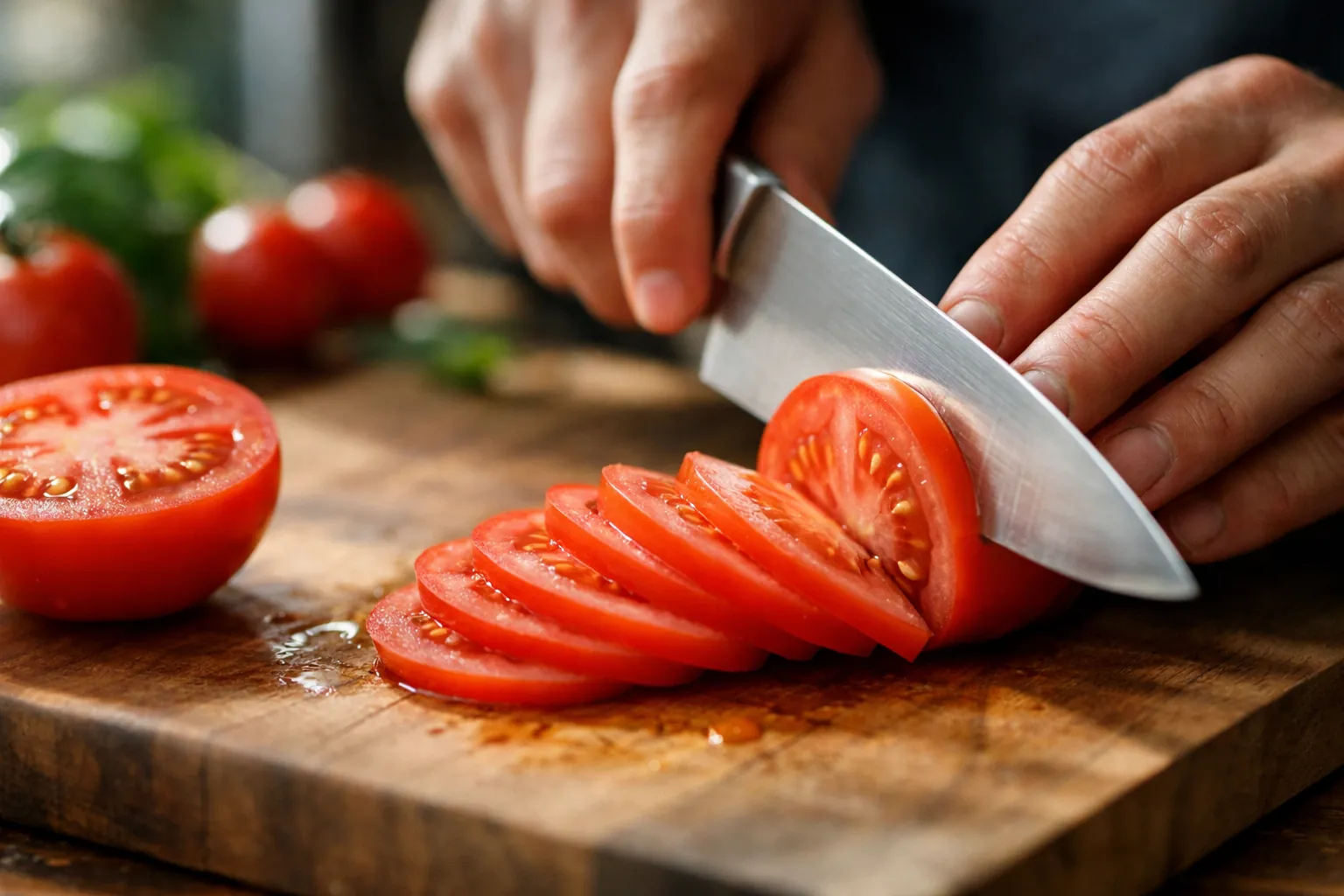
- Try the tomato or paper test. If the knife skates on a tomato skin or tears paper, it isn't cutting well.
- Hone first. Five or six light alternating strokes per side on the rod.
- Test again. If it now slices cleanly, the edge was just rolled. If it's still dull, it needs sharpening.
Steel, ceramic or diamond rod?
| Rod | What it does | Best for | Example |
|---|---|---|---|
| Steel (smooth or fine-ridged) | Straightens; removes almost nothing | Softer Western and German knives | Wüsthof 9" honing steel |
| Ceramic | Straightens and lightly sharpens | Harder steels, including many Japanese knives | Messermeister 12" ceramic rod (1200 grit) |
| Diamond-coated | Removes metal quickly; really a sharpener | Quick touch-ups on dull, softer knives | Kota Japan 12" diamond rod |
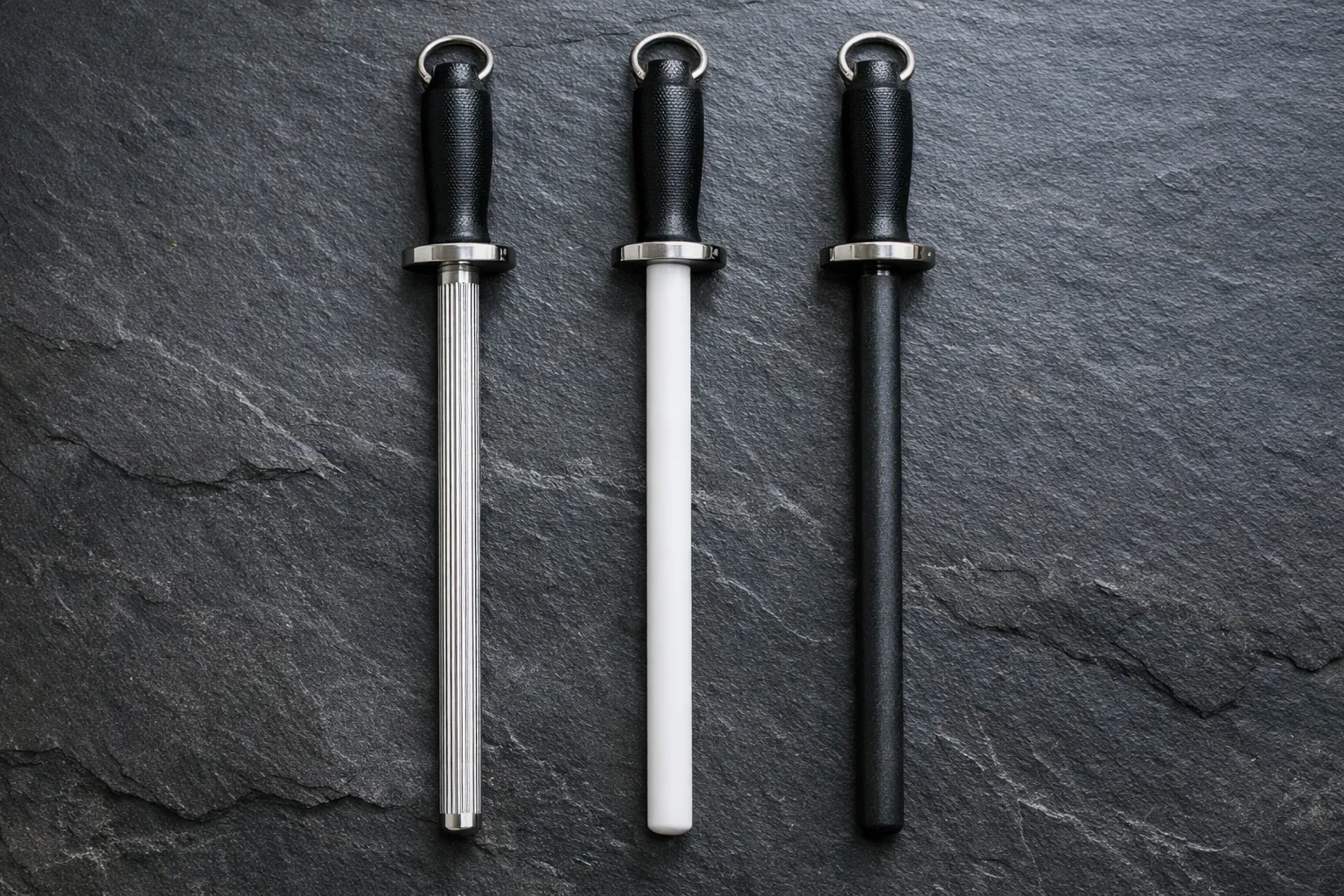
For most home cooks, a fine ceramic rod is the most versatile choice because it works on both softer and harder steels. Our best honing rod guide compares more options.
How to hone a knife in 30 seconds
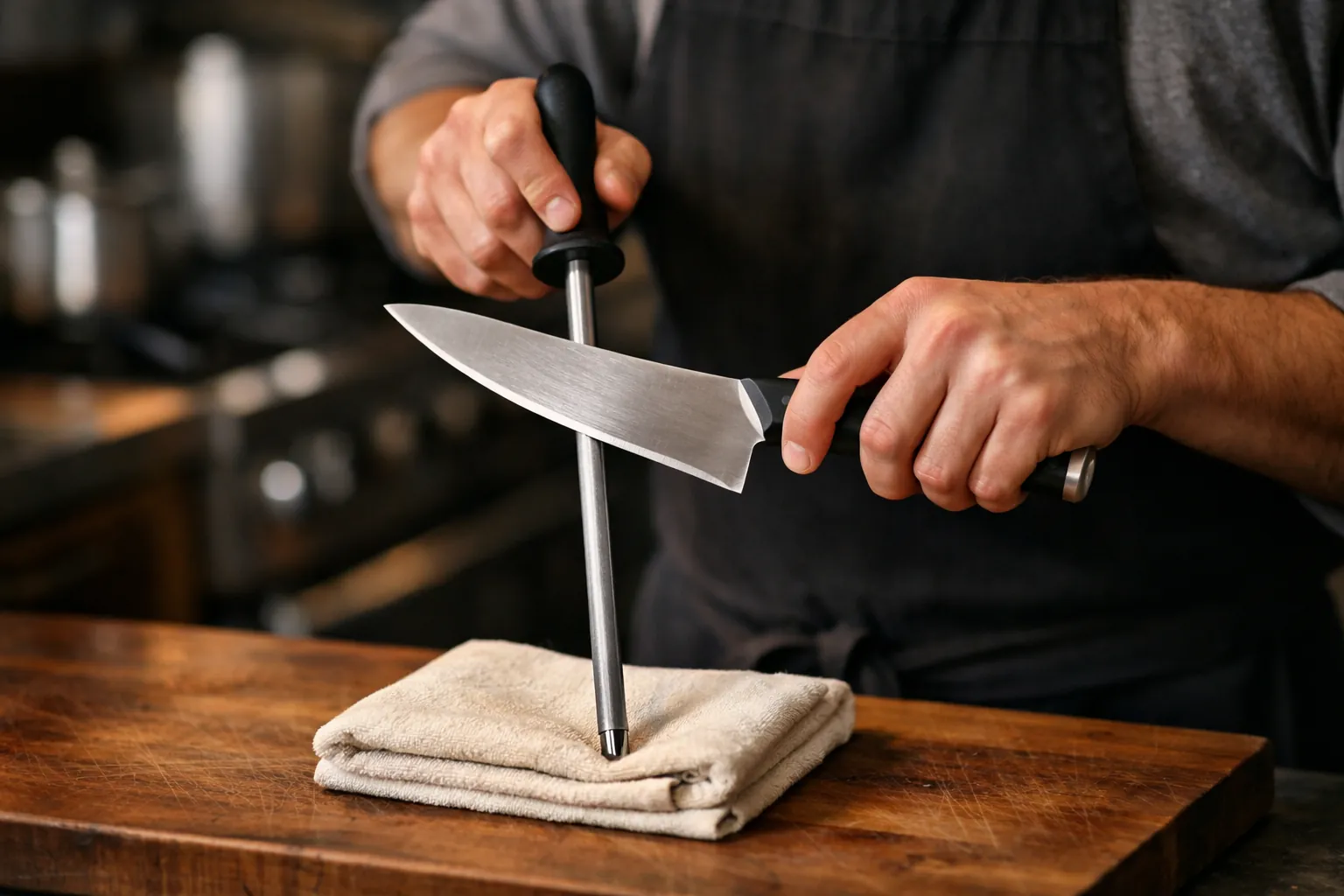
- Stand the rod vertically with its tip on a folded towel on the counter.
- Place the heel of the knife against the top of the rod at roughly the knife's sharpening angle: around 15° for many Japanese knives, around 20° for many Western knives. Check your knife maker's recommendation.
- Draw the knife down and toward you so the whole edge, heel to tip, touches the rod. Use light pressure, about the weight of the knife.
- Alternate sides, five or six strokes each. Finish with one or two very light strokes per side.
A realistic honing and sharpening schedule
| How you cook | Hone | Sharpen |
|---|---|---|
| A few meals a week | Before cooking, or when it feels off | 2–3 times a year |
| Daily home cooking | Every day or two | Every 2–3 months |
| Heavy prep, big batches | Every session | Monthly or when honing stops helping |
General guidance, not a rule. Steel, cutting board and technique all change the timing; let the tomato test decide.
Cutting boards make a bigger difference than most people expect. Wood and soft plastic boards are kind to edges; glass, stone and ceramic boards roll and chip edges quickly, so you'll hone and sharpen far more often on them.
Common honing myths
- "Honing sharpens the knife." A steel rod mostly straightens. Ceramic and diamond rods do abrade, which is why they can bring back a slightly dull knife; but none of them replace a proper sharpening.
- "Faster strokes work better." Speed adds nothing but risk. Slow, light, controlled strokes are what realign the edge.
- "More pressure, more effect." Heavy pressure can roll the edge further or chip hard steel. Use roughly the weight of the knife.
- "Any rod works on any knife." Ridged steel rods can be hard on thin, hard Japanese edges. A fine ceramic rod or a strop is the gentler choice; check your knife maker's recommendation.
- "If honing doesn't fix it, the knife is ruined." It just needs sharpening. Even badly neglected knives come back on a coarse stone.
Honing rod vs knife sharpener vs strop
The same logic applies to any sharpener. A pull-through, electric or guided sharpener does the whetstone's job (making a new edge); the rod maintains it. A leather strop is a third option for maintenance: it polishes and removes a fine burr and is gentle on hard Japanese steel. See the best leather strops and whetstone vs knife sharpener.
What to buy
- A honing rod: the Utopia Kitchen 12-inch steel rod is a popular low-cost option; a fine ceramic rod like the Messermeister 12" ceramic suits mixed knife collections.
- A whetstone: the Sharp Pebble 1000/6000 is the classic starter; learn the method in how to use a whetstone.
- Or a guided sharpener if you'd rather not learn freehand: the Work Sharp Precision Adjust.
The bottom line
A honing rod and a whetstone aren't competitors. Hone every few uses to keep the edge straight, and sharpen when honing stops working. If you can only buy one today, buy the sharpener; add a rod next and you'll sharpen far less often.
Product details from Amazon listings checked October 3, 2026. How we research · Affiliate disclosure