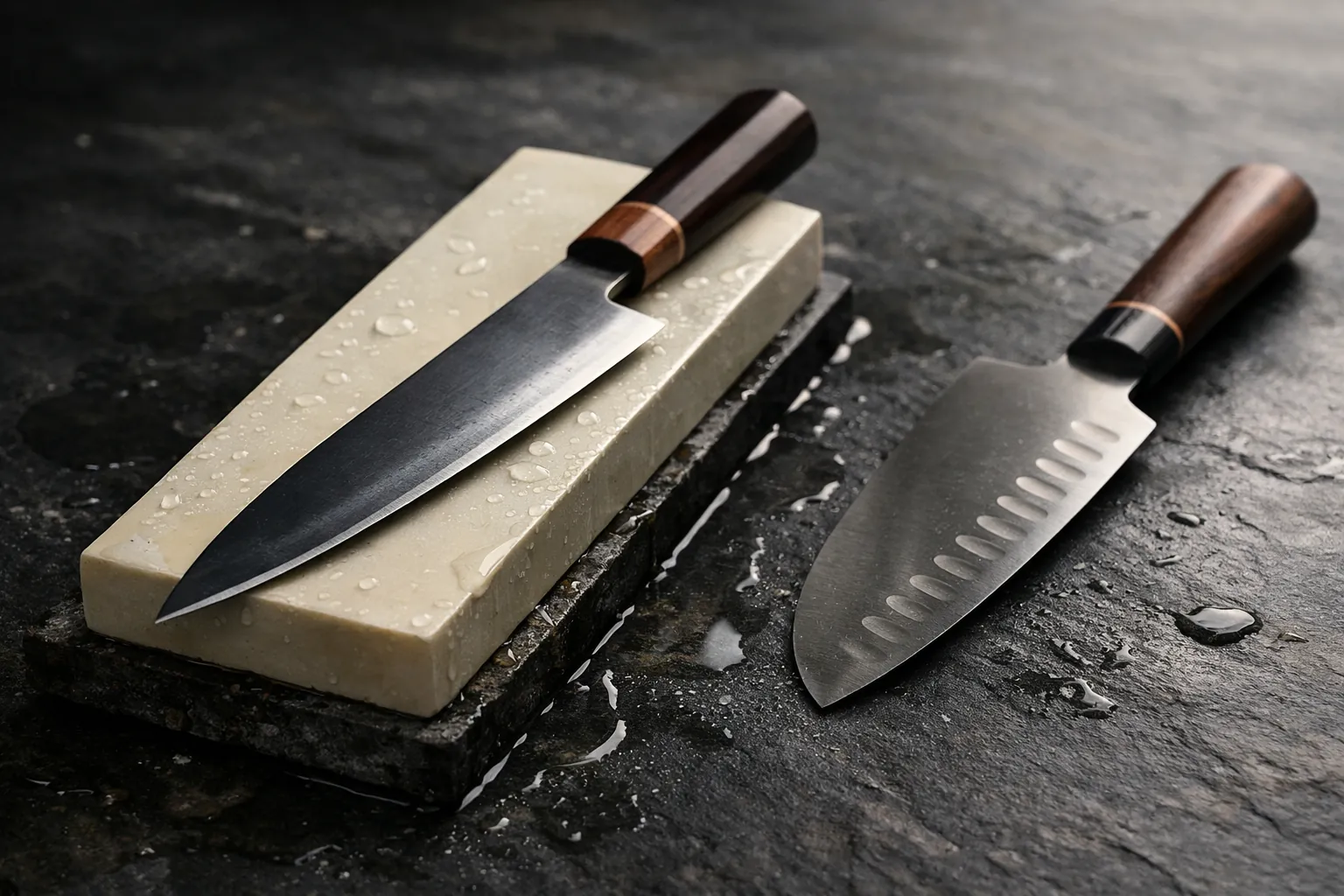
The best sharpener for Japanese knives is a pair of water stones, about 1000 and 5000 to 6000 grit, and the Shapton Kuromaku A-set is our top pick. If you'd rather not sharpen freehand, a guided system like the Work Sharp Precision Adjust set to 15° per side, or a rolling sharpener with a 15° side, gives a consistent edge without chipping the hard steel. Avoid coarse carbide pull-through sharpeners.
Quick picks
| Best overall | Shapton Kuromaku A-Set (1000 + 5000) | Amazon |
|---|---|---|
| Best budget whetstone | Sharp Pebble 1000/6000 Whetstone | Amazon |
| Best classic Japanese-brand stone | King KW65 1000/6000 | Amazon |
| Best if you don't want to freehand | Work Sharp Precision Adjust | Amazon |
| Best rolling sharpener | HORL 3 Cruise Rolling Sharpener | Amazon |
| Best premium powered option | Tormek T-1 | Amazon |
| Fastest electric for double-bevel knives | Chef'sChoice 15XV EdgeSelect | Amazon |
How we picked
- Angle compatibility. Every pick can sharpen at around 15° per side, where many Japanese double-bevel knives sit.
- Gentle on hard steel. No coarse carbide slots; fine diamond, ceramic or water stones only.
- Evidence. Amazon ratings and sales checked October 3, 2026, and specs from each listing (Tormek specs from Tormek's site).
We research rather than test: picks come from listings, maker specs, owner feedback and standard sharpening practice. How we research.
Why Japanese knives need different care
| Typical Japanese knife | Typical German / Western knife | |
|---|---|---|
| Steel | Harder, holds a finer edge, more brittle | Softer, tougher, rolls rather than chips |
| Common angle per side | Around 15° (some lower) | Around 20° |
| Blade | Thinner behind the edge | Thicker |
| Risky sharpeners | Coarse carbide pull-throughs, ridged steel rods | Few |
Generalizations; individual knives vary. Check your knife maker's recommendation.
The 7 best sharpeners for Japanese knives
Shapton Kuromaku A-Set (1000 + 5000)
A 1000 stone to sharpen and a 5000 to finish is the classic pairing for Japanese knives, and Shapton's ceramic Kuromaku stones are a favorite among Japanese-knife owners. They're generally used splash-and-go rather than soaked (check Shapton's instructions), so you can sharpen a gyuto on a weeknight without planning ahead. The cases double as stone holders. At 4.8 stars, it's the highest-rated option here.
- Grits#1000 + #5000
- Typeceramic water stones
- Working surface210 x 70 x 15 mm
- Includedventilated cases that double as holders
Why it stands out
- Ideal grit pair for Japanese edges
- Ready with a splash of water
- Works for single-bevel knives too
Think twice if
- You don't want to learn freehand sharpening
- You need a repair grit for chips
Sharp Pebble 1000/6000 Whetstone
For a fraction of the Shapton set's cost, this combination stone gives you the same basic recipe: 1000 to sharpen, 6000 to polish. The angle guide helps you learn a consistent 15° angle, and with 25,000+ ratings, it's the most-owned starter stone on Amazon.
- Grits1000 / 6000
- Lubricantwater
- Includedbamboo base, angle guide
- Amazon rank#1 in Honing Stones
Why it stands out
- Low cost, right grits
- Angle guide for learning
Think twice if
- You want splash-and-go convenience (it needs soaking)
King KW65 1000/6000
King is a long-established Japanese whetstone brand, and the KW65 combination stone is a traditional first stone for Japanese knives. Its 8-inch length gives plenty of room for a gyuto or sujihiki.
- Grits1000 / 6000
- Size8 x 2.5 x 1 in (listing)
- Includedplastic base
Why it stands out
- Trusted, traditional choice
- Generous length
Think twice if
- No angle guide or flattening stone included
Work Sharp Precision Adjust
If holding 15° by hand doesn't appeal, the Precision Adjust clamps the knife and holds it for you. Its lowest setting is 15° per side, which suits many Japanese double-bevel knives. Use the fine ceramic side for finishing, and consider a strop afterward for a more refined edge.
- Typeguided clamp + arm
- Angle15° to 30°
- Abrasives320/600 diamond + fine ceramic
- Warranty3 years
Why it stands out
- Consistent 15° without practice
- Diamond abrasives handle hard steel
Think twice if
- Your knives are sharpened below 15°
- You have single-bevel knives
HORL 3 Cruise Rolling Sharpener
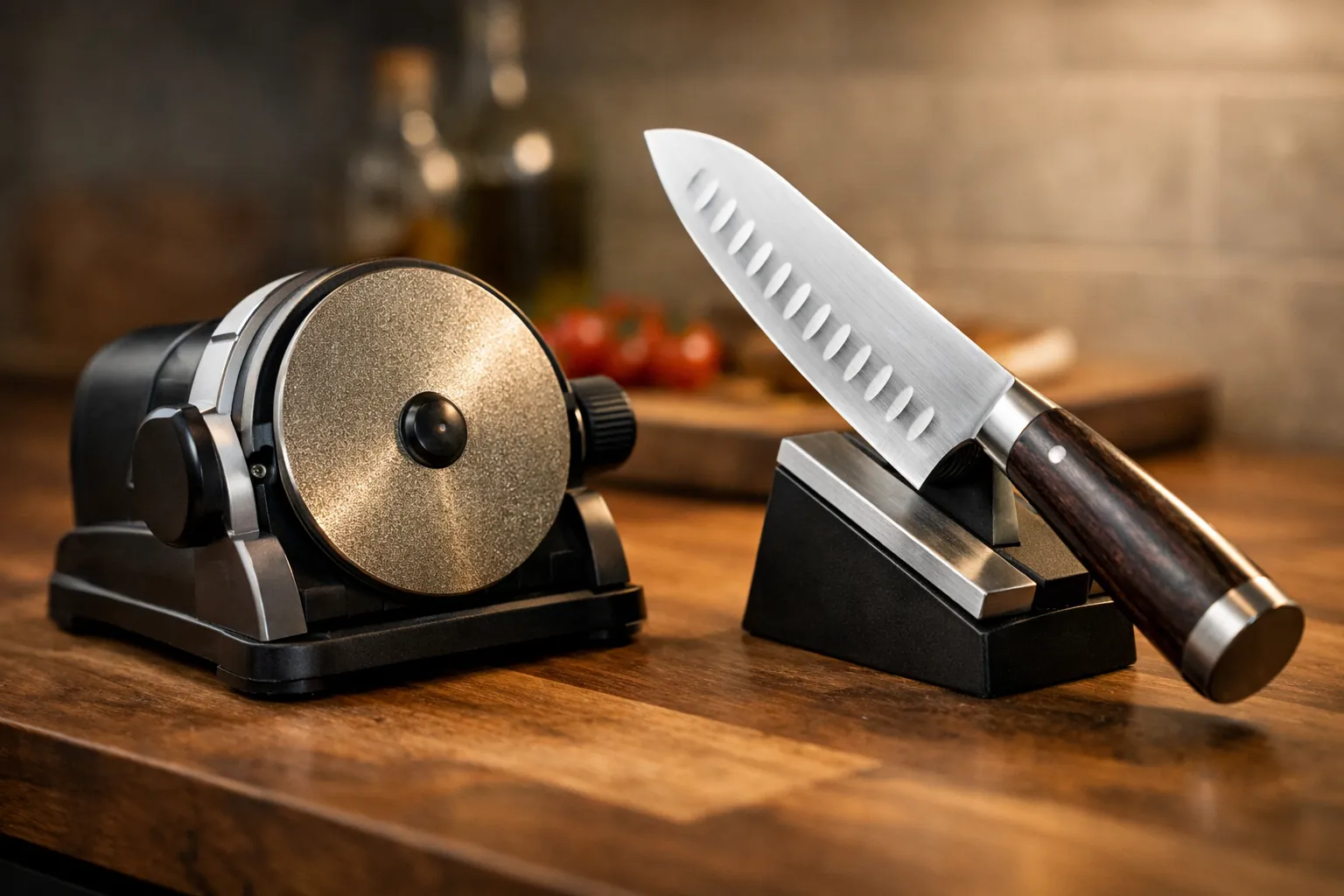
HORL says its 15° side gives fine Japanese, carbon and Damascus blades a delicate edge. The magnetic block holds the knife at the angle and you roll a diamond disc along the edge, then a steel disc to remove the burr. It's simple, clean and hard to get wrong.
- Angles15° and 20°
- Discsdiamond + stainless honing
- Holdermagnetic angle support
- Waternot needed
Why it stands out
- Dedicated 15° setting
- No water, no learning curve
Think twice if
- You want a polished finish beyond what a diamond disc gives
Tormek T-1
The T-1's stepless 8° to 22° range covers even very acute Japanese edges, and Tormek emphasizes minimal steel removal. It's a serious investment that makes sense for owners of several good Japanese knives who want repeatable results without stones.
- Angle8° to 22° per side, stepless
- Wheel600 grit diamond
- Honingcomposite wheel
- Noise45 dB (per Tormek)
Why it stands out
- Goes below 15° for very fine edges
- Fast, repeatable, removes little steel
Think twice if
- You own single-bevel knives
- You're on a budget
Chef'sChoice 15XV EdgeSelect
If speed is the priority and your Japanese knives are double-bevel, the 15XV puts a consistent 15° edge on them in about a minute, by the maker's estimate. It removes more steel than a stone, so it's best for everyday knives rather than treasured ones.
- Edge angle15°
- Stages3 (diamond, diamond, flexible stropping)
- Bevelsdouble-bevel
Why it stands out
- 15° edge with no skill
- Stropping stage for a cleaner finish
Think twice if
- Single-bevel or very thin, high-end knives
Side-by-side comparison
| Sharpener | 15° capable | Single-bevel | Skill needed |
|---|---|---|---|
| Shapton A-set | Any angle | Yes | High |
| Sharp Pebble 1000/6000 | Any angle | Yes | High |
| King KW65 | Any angle | Yes | High |
| Work Sharp Precision Adjust | 15°–30° | No | Low |
| HORL 3 Cruise | 15° / 20° | No | Low |
| Tormek T-1 | 8°–22° | No | Low |
| Chef'sChoice 15XV | Fixed 15° | No | None |
Buying guide
Know your knife's angle
Many Japanese double-bevel knives (gyuto, santoku, petty, nakiri) are sharpened around 15° per side, some lower. Check your knife maker's recommendation; the angle chart has typical ranges and a spine-height table for freehand sharpening.
Single-bevel knives need stones
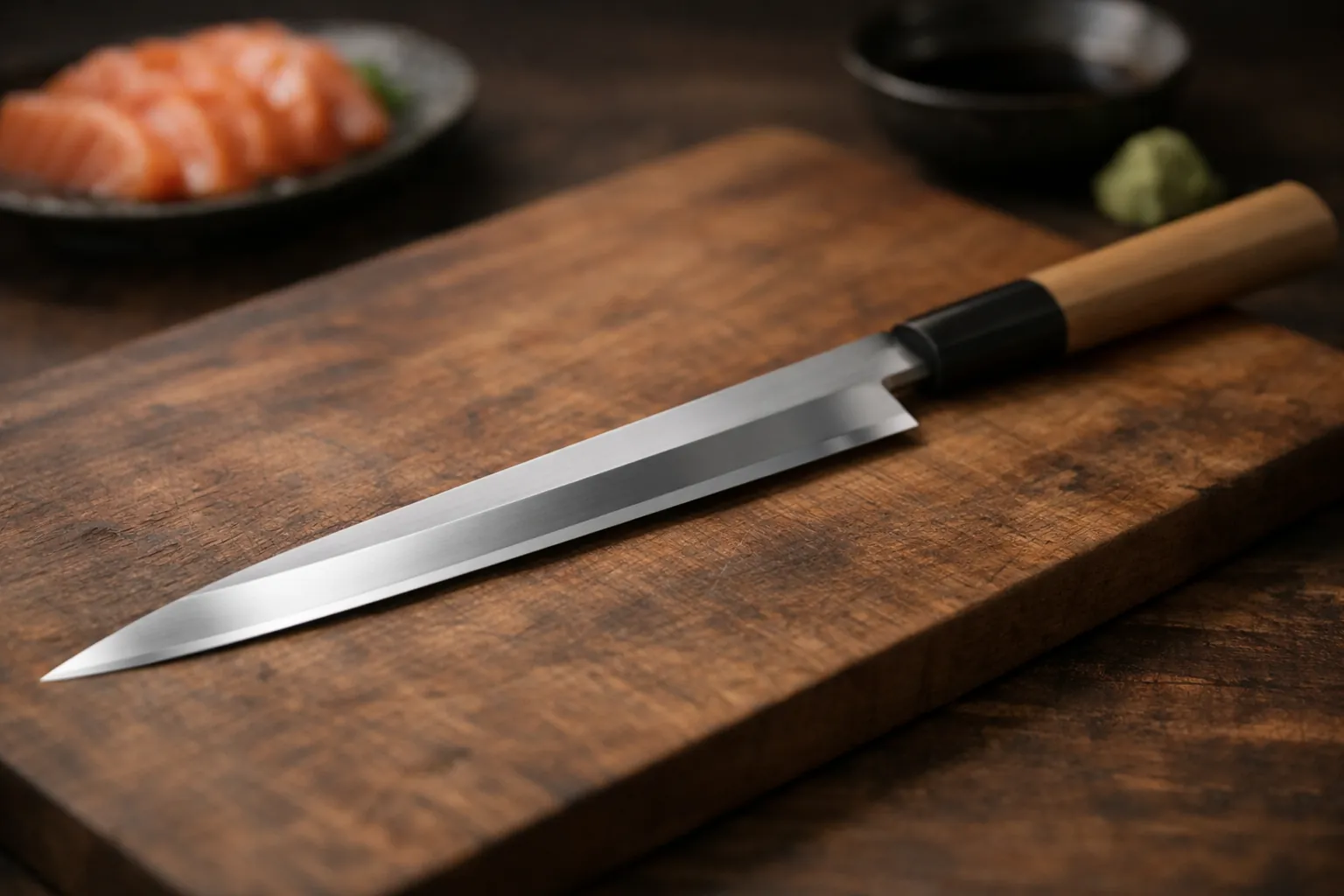
Yanagiba, deba and usuba knives are sharpened on the beveled side and only polished flat on the back. Use water stones; see how to use a whetstone.
Grits
1000 to sharpen and 5000 to 6000 to finish covers most Japanese kitchen knives; 8000 adds polish. Use a 400 only for chips. See the grit chart.
Maintain gently
Between sharpenings, a fine ceramic rod or leather strop is gentler on hard edges than a ridged steel. The Messermeister 12" ceramic rod is a fine-grit option; see also the best leather strops.
A typical 15° stone session
- Splash or soak the 1000 stone as the maker directs and set it on a non-slip base.
- Find 15°: on a knife about 2 inches (50 mm) tall at the heel, the spine sits roughly half an inch (13 mm) off the stone. Our spine-height table covers other widths.
- Sharpen one side, heel to tip in sections, until you feel a light burr along the whole edge on the other side. Then do the second side.
- Move to the 5000 or 6000 stone and repeat with lighter pressure and fewer strokes.
- Remove the burr with a few alternating feather-light strokes, then a few passes on a strop.
Hard Japanese steel raises a small, crisp burr that can be harder to feel than on a German knife, so go slowly and check often. Light pressure throughout protects the thin edge from micro-chipping.
When does a Japanese knife need sharpening?
- It slips on tomato or pepper skin instead of biting in.
- Onions start to crunch or tear rather than slice cleanly.
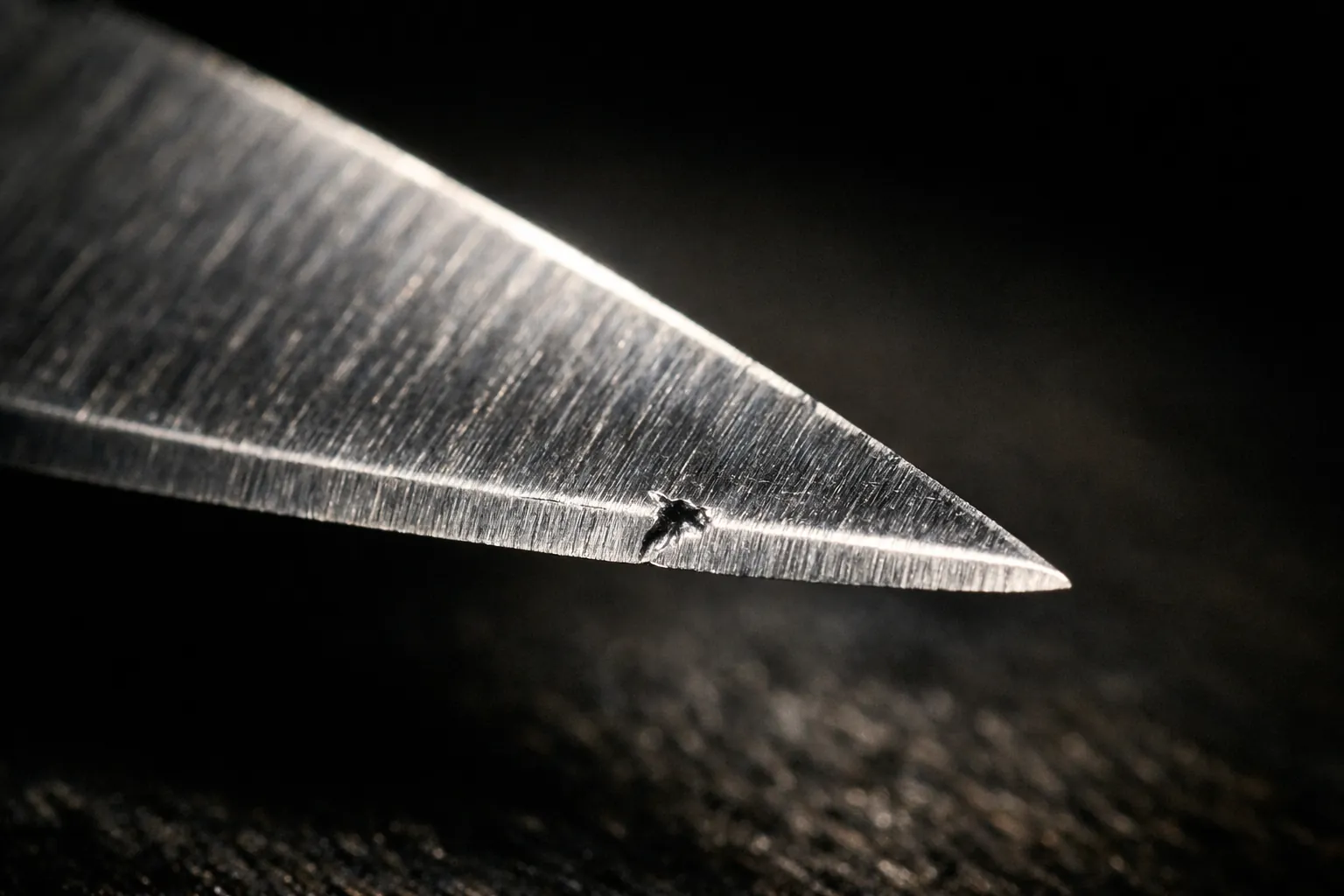
- You can see a bright line along the edge when you look straight down at it under a light; that's a rounded or chipped apex reflecting light.
- Stropping no longer brings it back. Stropping and ceramic honing extend the time between sharpenings, but eventually you need the stone.
Many home cooks find a good Japanese knife needs a full stone session only a few times a year, with a quick strop or ceramic rod in between.
What to avoid
- Coarse carbide pull-through slots. They tear rather than grind and can chip hard steel.
- Ridged steel honing rods used with heavy pressure.
- Glass, stone or ceramic cutting boards, which chip thin edges no matter how well you sharpen.
- Twisting the blade in bone, frozen food or squash; Japanese knives are made to slice, not pry.
The bottom line
For Japanese knives, water stones are hard to beat: the Shapton Kuromaku A-set is our top pick and the Sharp Pebble 1000/6000 the budget alternative. If you don't want to freehand, the Work Sharp Precision Adjust or HORL 3 holds 15° for you.
Specs, ratings and sales figures from Amazon listings (and Tormek's site for the T-1), checked October 3, 2026. We do not quote prices we have not checked. How we research · Affiliate disclosure